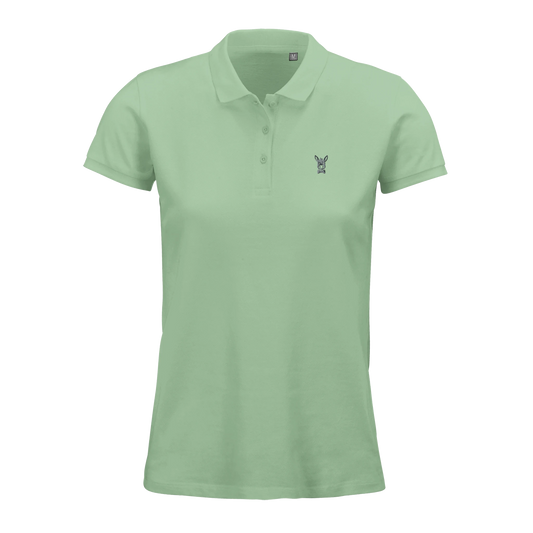
Organic Clothing: What You Can Actually Check
Share
A T-shirt can announce a favourite neighbourhood, a dry sense of humour or a firm opinion about pigeons before you have said good morning. That is the fun part. Organic clothing earns its place a little more quietly: in the fibre, the label, the way it was made and whether you will still reach for it after a dozen Mondays.
For people who like clothes with a point of view, the material should not be an afterthought. But nor does every cotton claim deserve a standing ovation. A few plain questions will tell you far more than a swing tag full of cheerful adjectives.
Organic clothing starts with a traceable claim
Organic cotton is cotton grown according to organic farming standards. In practical terms, those standards restrict the use of certain synthetic inputs and set rules around how the crop is handled. That is a useful starting point. It is not a magic phrase that describes every stage between field and your wardrobe.
The sensible question is: what exactly is organic? A garment might be made from 100% organic cotton. It might use an organic cotton blend. Or the brand may be referring only to part of the product. The product description should say which one, plainly.
Look for a stated fibre composition first. “100% organic cotton” is specific. “Made with organic materials” leaves room for a small-print scavenger hunt, which is not how anyone wants to spend a lunch break in Schaerbeek.
Certification can add another useful layer, especially when it covers the cotton supply chain or checks substances used in processing. Still, a logo is not a substitute for clear product information. You should be able to find the composition, country or region of production, and basic care guidance without needing detective training.
The fabric is only half the story
Cotton begins as fibre, but a wearable T-shirt passes through spinning, knitting or weaving, dyeing, cutting, sewing, printing and transport. Each decision affects how it feels, looks and lasts.
That is why “organic” and “made well” are related, but not interchangeable. A soft jersey can be thin and airy, which suits hot weather and layered outfits. A heavier fabric may hold its shape more firmly and feel more substantial. Neither is automatically the right choice. It depends on whether you want a light tee for cycling along the canal or a sweatshirt that can handle a chilly tram stop in February.
If a product page gives the fabric weight in gsm, that is a concrete detail worth noticing. Gsm means grams per square metre. It does not settle the whole question, because fit, knit and finishing matter too, but it helps you picture the fabric rather than buying a mystery wrapped in good lighting.
The same goes for construction. Useful details include ribbing at the neck, reinforced seams and whether the garment has been pre-shrunk. These are not glamorous facts. Neither is finding your favourite T-shirt still fits after the wash. Yet here we are.
Colour has a practical side
Colour is not frivolous. It is often why a garment gets worn instead of living at the back of the chair with the other good intentions.
Dark colours can make a graphic feel crisp and loud shades can turn a simple illustration into the main event. Lighter shades show more of the texture of the fabric and make a softer base for a print. Choose the colour that suits your wardrobe, not the one a product photo insists is having a moment.
For printed organic clothing, ask how the design is applied and where that happens. Printing in Europe keeps production closer to the people buying it across Belgium and the EU. It also makes the product story easier to follow than an anonymous image travelling through a long chain of mystery.
A good graphic should have a human reason to exist
A material can be carefully specified and still end up wearing a forgettable design. If you care about original clothing, the artwork matters just as much as the cotton.
Look closely. Is there an actual idea in the illustration? A local reference? A visual joke that rewards a second glance? Does the line work look like somebody chose it, rather than like a generic symbol that wandered in from a presentation slide?
Human-made design has the little signs of thought: an odd angle that makes the composition work, a colour choice with character, a joke aimed at people who know the territory. A StarBeek reference, for instance, lands differently when you have walked past Schaerbeek station in rain that appears to be coming from three directions.
That does not mean every shirt needs an elaborate backstory. Sometimes a sharp drawing and a well-placed line are enough. The point is that someone should have made a decision worth wearing.
Made to order changes the wardrobe maths
Buying clothing made to order means the garment is printed after you choose it. There is no mountain of every colour and size waiting for someone to take a chance on it. For a design-led shop, that also gives you more room to pick the garment colour that fits your own style.
There is a trade-off. Made-to-order pieces are not grabbed from a shelf and put in the post that afternoon. Production needs time. If you are shopping for a birthday on Saturday, do not begin the search on Friday at 16:45 with the confidence of a person who has learnt nothing from previous birthdays.
The upside is simple: the item is made because you selected it. At Dandy Donkey, WearArt garments are organic cotton, printed in Europe after the order is placed, and carry artwork made by human designers and photographers. Those are checkable details, not a fog machine of feel-good wording.
Made to order also suits people who do not want to dress like a copy-paste version of the person ahead of them in the coffee queue. A good graphic can be a small conversation starter. Or a perfectly acceptable way to signal that conversation should wait until after coffee.
Care is where a T-shirt earns its second life
The most considerate thing you can do for clothing you already own is wear it often and wash it with a little restraint. Organic cotton does not need ceremonial treatment, but printed garments appreciate sensible habits.
Check the care label first, because it belongs to that specific fabric and print. As a general approach, wash inside out, use a lower temperature where the label allows it, and avoid treating the dryer as the default setting. Air drying is gentler on prints and helps garments keep their shape.
Wash when the garment needs washing, rather than after a brief appearance at a desk. A sweatshirt worn over a T-shirt on a quiet office day is not necessarily ready for a full spin cycle by 18:00. Spot-clean a small mark when you can. Save the full wash for the moment it actually earns it.
Ironing also deserves a small note. Avoid putting a hot iron directly onto a printed design. Turn the garment inside out, follow the label and keep the dramatic heat for your frites, not your illustration.
Buy the one you will genuinely wear
The right organic clothing is not always the most neutral piece, the most colourful one or the garment with the longest description. It is the one that fits your life. Think about the trousers it will meet, the jacket it will sit under and whether the graphic still makes you smile after the first compliment.
For a gift, this test becomes even more useful. Choose a design that speaks to the recipient’s real world: their bike obsession, their beloved neighbourhood, their habit of being suspiciously precise about coffee. Personal does not have to mean their name in enormous letters. It can mean you noticed what makes them them.
If your wardrobe could use a little more character, have a browse through the WearArt collection. Pick a colour, find a human-made design with a joke you will still enjoy next month, and let the cotton do its quiet work.