Organic Apparel vs Fast Fashion Explained
Share
You can usually spot fast fashion before you even check the label. It is the T-shirt that looked decent under shop lighting, then twists after two washes and develops the kind of neckline only a scarecrow could love. Organic apparel vs fast fashion is not just a style debate. It is a question of what you are actually buying when you pay for clothes - a cheap moment, or something made to stay in your wardrobe longer than a carton of oat milk.
For anyone who likes clothes with a bit of personality, this matters even more. If what you wear says something about you, it helps if the thing survives long enough to finish the sentence.
Organic apparel vs fast fashion: what is the real difference?
At a glance, the difference can look annoyingly simple. One is cheaper and everywhere. The other often costs more and arrives with words like organic cotton, small batch, printed to order or ethically made attached to it. But the real split runs deeper than a swing ticket.
Fast fashion is built for speed, volume and relentless novelty. The system depends on making lots of garments, getting them into circulation quickly and moving on to the next trend before the first one has had time to lose a button. It thrives on impulse. Low prices make the risk feel tiny, so people buy more than they need and keep less than they should.
Organic apparel usually starts from a different idea. Instead of asking how cheaply a product can be made, it asks what materials, processes and production choices create a better outcome. That can mean organic cotton grown without the usual cocktail of synthetic pesticides and fertilisers. It can mean printing only when someone actually orders. It can mean smaller runs, local or regional production, and a focus on garments that feel good enough to wear repeatedly rather than once for a hen do and never again.
That does not make every organic item perfect or every affordable brand automatically villainous. Clothes exist on a spectrum. But the priorities are different, and those priorities show up in the fabric, the fit, the lifespan and the footprint.
Why cheap clothing is rarely actually cheap
Fast fashion's greatest party trick is making the price tag look like the whole story. A tenner for a top feels like a win. Until that top fades, shrinks, bobbles or loses shape before the season has finished pretending to be spring.
The maths gets awkward quite quickly. If a cheap sweatshirt looks tired after a handful of wears, while a better-made organic one still holds its shape months later, the lower upfront cost starts to look less clever. Cost per wear is not the sexiest phrase in fashion, but it is far more honest than a discount sticker.
There is also the hidden cost no receipt shows. Fast fashion relies on overproduction as a business model. Huge volumes are made because predicting demand is messy and flooding the market is profitable enough when manufacturing costs are low. Unsold stock, transport emissions, poor-quality fibres and landfill all sit quietly behind the bargain rail like uninvited guests who somehow still ate the pudding.
Organic apparel can cost more because the inputs and production choices often cost more. Better cotton farming practices, fairer labour conditions, lower-volume production and made-to-order printing are not usually routes to rock-bottom pricing. The trade-off is that you are paying for fewer shortcuts.
Fabric, feel and the long-haul test
Most people do not need a lecture on fibre science. They just want clothes that feel decent on the body and do not behave like a damp paper bag after laundry day.
This is where organic apparel often earns its keep. Organic cotton garments are commonly softer, more breathable and more comfortable for everyday wear, especially in sweatshirts, tees and baby clothing where the fabric sits close to skin. That softness is not magic. It comes from fibre quality and from not treating the garment as disposable from the outset.
Fast fashion can sometimes imitate the look of quality surprisingly well for about five minutes. The trouble starts with repeat wear. Thin fabrics become thinner. Seams pull. Prints crack. The cut that looked sharp online becomes wonky enough to suggest it was assembled during a fire drill.
Not every organic garment will outlast every fast fashion piece, because construction matters as much as fibre. But brands that use organic materials often pair them with slower production methods and more considered design. That combination tends to age better.
The ethics bit, without the halo polishing
People can get twitchy when clothing conversations turn moral. Fair enough. Nobody wants to be scolded while buying socks.
Still, the ethics are part of the story. Fast fashion's speed depends on supply chains that are often hard to trace and harder to defend. When pressure is piled onto factories to produce huge quantities for low prices at speed, somebody down the line usually pays for it in poor conditions, poor wages or both.
Organic apparel does not automatically solve every labour issue, and any brand pretending otherwise deserves a raised eyebrow. But it often sits inside a slower, more transparent model. Smaller production runs, regional manufacturing and print-on-demand systems can reduce waste and make it easier to keep an eye on how and where things are made.
For shoppers, that means you are not just choosing a fabric. You are choosing a production logic. One says more, faster, cheaper. The other says make what is wanted, make it better and stop manufacturing random surplus that ends up as textile confetti.
What about style? Does sustainable mean worthy and dull?
This is where some people still picture organic apparel as a beige lecture with sleeves. Very earnest. Very oat biscuit. Very likely to be sold next to soap shaped like a pebble.
Thankfully, that stereotype is wearing thin. Organic apparel no longer needs to look like a uniform for people who alphabetise lentils. It can be bold, graphic, funny, niche, weird and gloriously specific. In fact, slower production often suits expressive design better because it rewards intention over mass appeal.
Fast fashion chases trends because trends keep people buying. Organic and made-to-order apparel can do something more interesting. It can serve identity. That means clothes chosen because they sound like you, not because an algorithm decided everyone should dress like a futuristic PE teacher for six weeks.
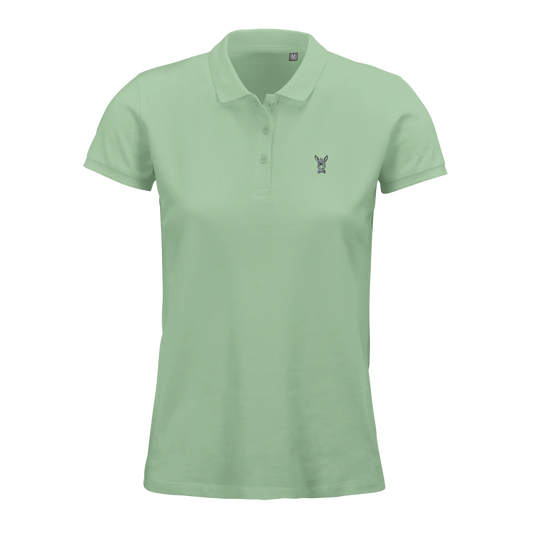
For brands with a design-led approach, that is the sweet spot. You get the personality of statement clothing without the usual overproduction circus. Dandy Donkey, for example, leans into organic garments printed when customers actually choose them, which is a far more civilised arrangement than producing mountains of maybe-wanted stock and hoping for the best.
Is fast fashion always the wrong choice?
Real life is rarely that tidy. Budgets matter. Access matters. Sometimes people need something affordable now, not a perfect solution later. Pretending everyone can simply swap their wardrobe overnight for beautifully made organic staples would be nonsense.
There is also a difference between buying carefully from a lower-priced brand and treating clothing as disposable entertainment. If someone wears a basic item for years, repairs it and buys only what they need, that behaviour is more thoughtful than panic-ordering expensive "ethical" pieces that barely get worn.
So yes, it depends. The most sustainable wardrobe is often the one built slowly, worn heavily and chosen with a bit of sense. But if you are deciding what kind of system to support more often over time, organic apparel usually points in a better direction than fast fashion.
How to shop smarter without becoming unbearably smug
If you are weighing up organic apparel vs fast fashion, the trick is not to become a saint of knitwear. It is to ask better questions.
Start with wearability. Will you still want this in six months, or is it only exciting because it is cheap and in front of you? Check fabric composition, not just marketing fluff. Look at where it is made if that information is available. Think about whether the garment was likely produced in massive speculative volumes or made in a way that matches actual demand.
Then consider personality. A piece you genuinely love gets worn more. That matters. A well-made organic sweatshirt in the right colour with a design that actually feels like you will beat three forgettable bargain buys skulking at the back of the wardrobe.
And if something costs more, ask whether that price reflects material quality, better production and durability, or just shiny branding. Not every expensive garment is virtuous. Some are simply overpriced with excellent lighting.
The best wardrobe is not the biggest one or the trendiest one. It is the one that works hard, feels right and does not leave you regretting your life choices by the third wash. If a piece can carry your personality and your principles at the same time, that is not preachy. That is just a smarter buy.