On Demand Versus Bulk Printing: What Fits?
Share
A T-shirt does not need to exist in six colours, eight sizes and three boxes in a warehouse before someone decides they want it. Nor does a funny sign need a lorry-load of copies to make a notary friend laugh at their housewarming. That is the useful bit of on demand versus bulk printing: it is less about a printing jargon contest and more about how a design reaches the person who will actually enjoy it.
For a colour-conscious dresser, it can mean choosing the garment colour that gives a graphic its proper stage. For a gift-giver, it can mean finding a No Parking sign that says exactly what the recipient’s job deserves. For the designer, it means a drawing made by a human gets its moment without being turned into a mountain of guesswork.
On demand versus bulk printing, in plain Brussels terms
Bulk printing means making a large quantity of the same item before customers have bought it. Think hundreds or thousands of identical T-shirts, posters or signs produced in one go, then stored until they find homes. The more copies printed at once, the lower the production cost per copy can become. That maths suits an event with a fixed crowd, a known uniform requirement or a design that needs to be ready on a particular Tuesday morning.
On-demand printing works the other way round. The customer orders first. Then the chosen design is printed on the selected garment or product. There is no need to predict whether everyone will suddenly want a coral hoodie with a cheeky local illustration, or whether navy will have its week in the sun.
Small-run printing sits between the two. A limited batch is made, but not a warehouse-filling one. It is a sensible fit for products where the material, finish or outdoor protection matters, such as Dibond signs. At Dandy Donkey, WearArt clothing is printed in Europe after it is ordered, while SignArt signs are made in small runs and finished with a protective layer for outdoor use.
None of these methods is morally superior by default. They solve different practical problems. The interesting question is not, “Which is the winner?” It is, “What does this product need to do?”
When printing to order makes the most sense
On-demand printing earns its keep when choice matters. Clothing is the obvious case because fit, size and colour are personal. One person sees a bold graphic and wants it on a light tee. Another wants the same design on a darker sweatshirt. Making every possible combination in advance would mean a lot of forecasting and even more shelves.
It also gives smaller design collections room to breathe. A graphic inspired by StarBeek or a dry Brussels observation does not have to prove it can sell several hundred units before it gets printed. It only needs to find the people who recognise the joke. That is a better test of a design than asking whether it can fill a stockroom.
There is a creative benefit too. A platform can give more illustrators and photographers a place to publish their work when it does not need to buy a huge batch of every new design. At Dandy Donkey, creators retain their creative freedom, with one firm rule: the designs are made by people, not generated by a machine. The resulting collection can be broader, stranger and more personal. Good. City life has enough beige meetings already.
There are trade-offs. Printing after an order has been placed takes longer than picking a ready-made item from a shelf. Customers should expect production time before dispatch, especially around busy periods. And on-demand production does not magically make every garment identical in feel or placement. Print methods, fabric shades and garment cuts all have their own character.
For most people, that is a fair exchange when the item is something they plan to wear often. A made-to-order organic cotton T-shirt in the colour they chose has a different logic from a generic freebie that arrives in whatever size was left over.
Choice is not a small detail
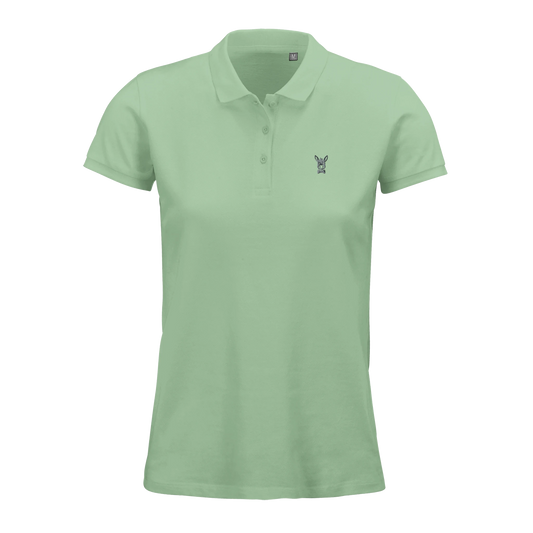
Colour changes a graphic more than most people expect. A witty line drawing can look sharp and spare on white, louder on red, or slightly more mysterious on a deep green hoodie. On-demand apparel lets the wearer make that call rather than accepting the colour a buyer ordered months ago.
That matters when the point is personality. The garment is not merely a carrier bag for a design. It is part of the design’s final look. If you are going to wear your personality, you may as well choose its background.
Why small runs suit signs and gifts
A sign is not a T-shirt with corners. It has different jobs to do. It may hang in a hallway, live beside a garage door or be wrapped for a colleague who is retiring and will now have more time to guard their imaginary parking space.
Small-run printing allows makers to produce a considered number of signs while keeping materials and finishing consistent. Dibond is particularly suited to this kind of product because it is rigid and made for displaying. Add a protective layer and a humorous No Parking sign can handle outdoor use without losing its punchline at the first Belgian drizzle.
It also keeps gift ideas delightfully specific. A Notary Parking sign, complete with “violators will be disinherited”, is not for every household. That is precisely why it works. A small run makes room for a sign aimed at the notary, the cyclist, the cook or the person whose bathroom rules have become suspiciously detailed.
Bulk printing would be the logical choice if one sign design were needed for a large, fixed audience at the same time. Small runs are more at home with varied professions, hobbies and occasions. They let a collection have around 35 different winks instead of betting everything on one very broad joke.
The stock question is really a guessing question
Every physical product begins with a prediction. Will people want this? In which size? In which colour? Next month or next year? Bulk printing asks those questions before the sale. On demand shifts much of the answer until after the customer has chosen.
That can reduce the risk of producing piles of items that never find their person. It also means brands have to be honest about lead times. There is no pretending a garment was waiting by the door all along when it is being printed specifically for the order.
Small runs make a different kind of prediction. They say, “We think this collection has a following, but we do not need a mountain of it.” For signs, that is often the practical middle ground: enough stock to make a gift feel accessible, not so much that every cupboard becomes a monument to one joke.
For shoppers, the lesson is simple. If you need 200 matching shirts for a date already printed on the invitation, bulk is often the sensible route. If you want a graphic that feels chosen, in a colour and size that suit you, printing to order is usually the better fit. If you are buying a hard-wearing, funny sign for one particular person, a small-run item often hits the right note.
What to check before you choose
Production method tells only part of the story. Look at the facts around it. For clothing, check the fabric, where it is printed, what sizes and colours are available, and whether the design has been created by a person with a point of view. For a sign, check the material, whether it is intended for outdoor use, and whether the joke actually belongs to the recipient’s world.
Timing deserves a quick look too. Made-to-order goods need production time. Small-run goods may be ready sooner, but a popular design can sell through. Neither is a problem when you know it before buying a birthday gift at 23:48 the night before the birthday. That particular printing method is called panic.
The right choice is the one that respects the object. A printed-to-order hoodie should feel like something you chose, not something you were allocated. A small-run Dibond sign should feel like a knowing nod to its owner’s profession or hobby. And a bulk order should arrive when a whole group needs the same thing, with no room for dramatic individual colour debates.
If your next gift needs a joke with a job title attached, have a wander through the SignArt collection. A good sign can say “I know you” before the wrapping paper has even left the room.