An Ethical Merch Brand Case Study in Brussels
Share
A notary opens a birthday present at the office. It is a Dibond sign that reads, “Notary Parking, violators will be disinherited.” Nobody needs a speech explaining it. The joke lands before the wrapping paper reaches the bin.
That small moment is the useful starting point for an ethical merch brand case study. Ethics in merchandise can sound like a committee meeting with worse biscuits. In practice, it comes down to ordinary, checkable choices: who made the design, where an item is printed, how much is produced before anyone has asked for it, and whether the object has enough character to stay around.
Dandy Donkey is a Brussels-based shop built around that logic. Its products are made for people who would rather give a notary a very specific parking sign than another polite bottle of something. The brand sells apparel and signs, but the more interesting story is how a small merch shop can make personality, production and creative credit pull in the same direction.
The ethical merch brand case study starts with the artist
The first decision happens long before a T-shirt reaches a printer. Every Dandy Donkey design comes from a human designer or photographer in an open creative community. They retain creative freedom and earn a share from each sale.
That is not a decorative footnote under a product description. It changes what customers see. A graphic can be odd, local, sharply observed or gloriously niche because it did not begin as a generic template trying to offend nobody and interest nobody either.
There is one firm rule: no AI-generated designs. The point is not to turn every shopping choice into a philosophical seminar. It is to make the promise clear. When a customer chooses a print, there is a person behind it, with an eye, a sense of humour and probably a folder full of sketches that nearly made the cut.
For the design-first buyer, this matters because a good graphic has a point of view. A cycling-themed illustration or a StarBeek nod to Schaerbeek should feel like it came from someone who has actually noticed the streets, the people and the little rituals of city life. You can spot the difference between a visual idea and decoration that merely fills a rectangle.
Print after the order, not before the guesswork
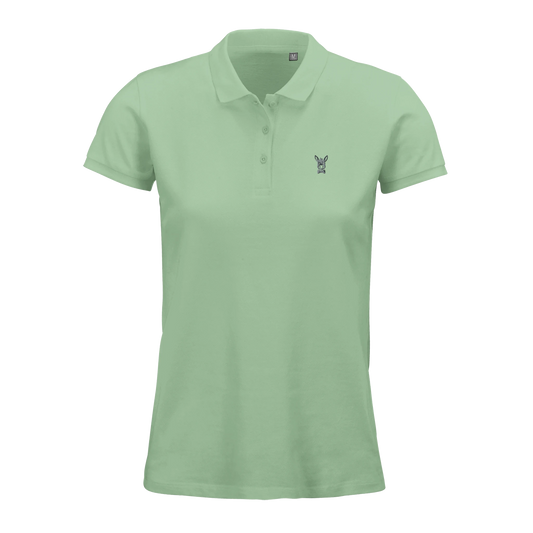
WearArt clothing is made from organic cotton and printed in Europe only after a customer places an order. That means the shop does not need a tower of speculative T-shirts in every size, colour and design, waiting to discover whether anyone wants them.
Made-to-order production is not magic. It can mean customers wait a little longer than they would for an item already sitting on a shelf. It also means choice needs to be managed carefully, because offering every possible combination can turn a simple purchase into a late-night decision about seventeen shades of blue.
But for a design-led shop, the trade-off makes sense. The customer can choose a garment colour that suits their wardrobe and personality, while production follows real demand. A bright print can live on the colour that gives it room to breathe, rather than being locked into one bulk order made months earlier.
This approach also gives smaller design collections a fair chance. Not every drawing needs to become a thousand units before it can exist. A witty local reference, a retro visual or an illustration with a very specific audience can be printed when its people find it. That is a more natural rhythm for independent work than asking every design to behave like a stadium tour.
European production gives the details somewhere to stand
“Made responsibly” is the sort of phrase that often arrives wearing a neat little halo and leaves no evidence behind. More useful are the facts: organic cotton for WearArt, printing in Europe, and production triggered by an actual order.
Those details do not answer every question a curious customer might have. No product has zero impact, and transport still exists even when a parcel is travelling within Europe. An honest ethical approach is not about claiming spotless hands. It is about avoiding vague promises and showing how the product was made, in terms people can assess for themselves.
For the colour-conscious dresser, this is practical as well as principled. Organic cotton clothing can be a canvas for loud colour and graphic prints without becoming disposable visual noise. The idea is not to dress like a traffic cone on a Tuesday. Unless, of course, Tuesday has earned it.
A well-chosen T-shirt or sweatshirt gets worn because it feels like its owner, not because a trend told them to buy it. That is why the story behind a print matters. Wear your personality is not just a line for apparel. It is the difference between clothing that stays in rotation and clothing that quietly migrates to the back of a drawer.
Small runs make sense when the joke is specific
SignArt works differently from apparel. The signs are printed on Dibond in small runs and finished with a protective layer for outdoor use. This suits objects that need to be sturdy enough for a garage wall, a garden gate or the kind of hallway where visitors immediately ask, “Is that real?”
The No Parking collection has around 35 designs built around professions, hobbies and broad human habits. The format is familiar, which is why the twist works. “Notary Parking” is funny because it borrows the stern language of a warning sign, then makes it sound as if someone has taken inheritance law personally.
Small runs are a sensible fit here. A sign for a developer, teacher, cook or cyclist does not need to be manufactured by the lorry-load to be worth making. It needs to be clear, well printed and specific enough that the recipient feels seen.
That specificity is also useful for gift buyers. A generic present asks the recipient to do most of the emotional work. A sign that gently pokes fun at their job or hobby has already done the homework. It says, “I know you well enough to notice the thing you spend half your life talking about.”
Of course, the joke still needs judgement. The safest choice is usually a proud professional identity, a favourite pastime or a household quirk, rather than a sensitive subject disguised as banter. If you can picture the person putting it up with a grin, you are probably on the right street.
Local humour travels better when it stays honest
Brussels is full of visual character. A tram stop, a corner café, a rainy pavement in Schaerbeek, a bike locked to a sign that definitely was not meant for bikes. Local culture gives designers material, but it should not be reduced to a souvenir version of itself.
The StarBeek collection takes its cue from Schaerbeek without pretending every customer needs a postcode to enjoy it. That is the useful balance. The work can have local roots and still travel across Belgium and the EU, because people recognise a strong visual joke or a bit of urban affection wherever they live.
This is where an ethical merch brand becomes more than a list of production claims. It gives creative people room to make work with a voice. It gives buyers a way to choose something less anonymous. And it avoids pretending that every object must save the planet before breakfast.
What this model asks of the customer
A customer has a role in this too. Choosing made-to-order apparel means accepting that the item is being produced for them, rather than plucked from a mountain of pre-made stock. Choosing a small-run sign means picking something with a deliberate point of view, not a blank object that could belong to anybody.
It helps to buy with a real use in mind. Think of the hoodie you will reach for on a grey Monday, not the one that looks good only under flattering shop lights. Think of the housewarming present that will make a friend laugh every time they unlock their front door. Specificity is not a limitation. It is the whole trick.
If a wardrobe could use a little more colour with a human story behind it, have a wander through the WearArt collection. If the next birthday calls for a warning sign nobody will take seriously, SignArt has a parking space for that.